
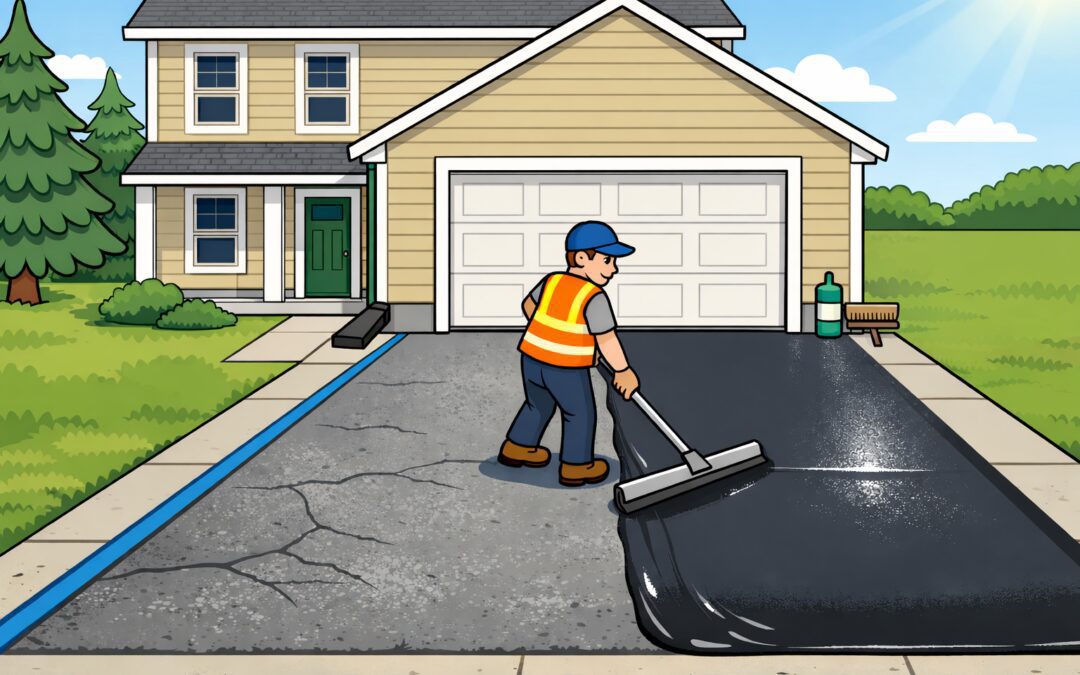
Residential Driveway Sealing in Maine: What to Know
A good seal coat helps your driveway shed water and resist sun damage while keeping a clean, dark finish. Done at the right time, it is one of the simplest ways to slow surface wear in Maine through sun, salt, and spring snowmelt.
Sealing is not a cure-all. Driveway sealing cannot fix soft spots, sinking edges, or widespread “alligator” cracking that points to base failure. It also will not correct drainage that sends water across the pavement. The goal is protection, not structural repair. It should feel like a practical maintenance step, not a cosmetic quick fix. You get the best payoff when the driveway is still in fair condition, cracks are handled first, and water is moving away from the pavement. For most residential asphalt paving, good results come from pairing a sound base with a clean surface, and a stable forecast that gives the coating time to set.
When Residential Driveway Sealing Makes Sense for a New or Existing Drive
For a brand-new driveway, the first question is whether you need to seal right away. Industry guidance varies, but the Asphalt Institute notes that a well-designed, low-traffic pavement like a driveway or parking lot should not require seal coating for roughly two to five years, depending on climate severity and the quality of the original work. If the surface is porous, lightly cracked, or starting to look dry, a coating may make sense sooner after the pavement is ready to accept it.
For an existing driveway, focus on condition. Fine cracks, fading, and slight roughness are good candidates. Deep failures, loose edges, and soft areas are not. In Maine, plan for dry weather and follow common temperature guidance used in many specs: apply only when pavement and air are about 50°F and rising, with no freezing temperatures expected for at least the next 24 hours. If rain is in the forecast, reschedule.
Prep That Makes Sealer Work
Prep is where most results are won or lost. Start by clearing the entire drive, then remove grit and organic debris. A stiff broom and blower help, and a careful wash can be useful, but do not leave standing water. Treat oil spots so they do not bleed through and interfere with adhesion. If weeds are growing in cracks, remove them completely so you are not sealing overgrowth.
Next, fix cracks and failed areas before you coat. Crack work matters because open cracks invite water and debris into the pavement structure, which accelerates breakdown during freeze-thaw cycles. Address cracks, patch potholes, and rebuild any soft spots so the surface you coat is stable and clean.
Finally, control edges and transitions. Tape along concrete walks, garage slabs, stone borders, and siding lines. Create a clean edge at gravel shoulders so the coating does not feather into loose material. A sharp edge looks better, wears more evenly, and makes the next coat easier.
Residential Asphalt Paving Longevity
The longest-lasting driveways are built like simple drainage projects. Water should move off the surface, away from the edges, and away from the base. When that is true, surface treatments can do their job. This is the same logic behind pavement preservation: do the right maintenance early so you keep good pavement in good condition.
If you already have asphalt, watch for warning signs like ponding, shoulder collapse, and cracks that reopen quickly after filling. Those usually mean the base or drainage needs attention before a coating will deliver much value. A driveway that stays wet along the edges, or that breaks apart where tires turn, often needs edge support, grading, or localized base repair first, especially through Maine winters.
For a maintenance overview, review the Federal Highway Administration’s pavement preservation overview.
Aftercare and Recoat Rhythm
After application, protect the finish while it cures. Keep foot traffic off until the surface is dry, and avoid vehicle traffic until the coating is fully set. In cool, humid weather, that waiting period is often longer than homeowners expect. If you must park, avoid hard turns that can scuff a fresh surface. Use plywood under kickstands, jacks, or trailer tongues to prevent impressions.
Long term, focus on habits that reduce water exposure for residential asphalt paving. Redirect downspouts so they do not dump onto the driveway, keep edges supported, and clean debris that holds moisture. When the finish looks thin, gray, or uneven again, it may be time to recoat, as long as the pavement is still structurally sound.
Quick FAQs
- What should I budget for? Costs depend on driveway size, surface condition, and how much crack work or patching is needed first. A clear quote should separate prep from the coating so you can compare options.
- DIY or professional? DIY can work on small, simple driveways if you prep thoroughly and catch a stable weather window. A pro crew is usually faster, cleaner, and better at repairs and neat edges.
- Will it hide flaws? A fresh coat improves color, but it will not hide drainage problems, dips, or major cracking.
Book a free assessment
Want a clear plan? Start with a site walk. See our Residential Paving services, learn about our owner-on-site approach on the About page, and contact us to schedule a free in-person assessment.