
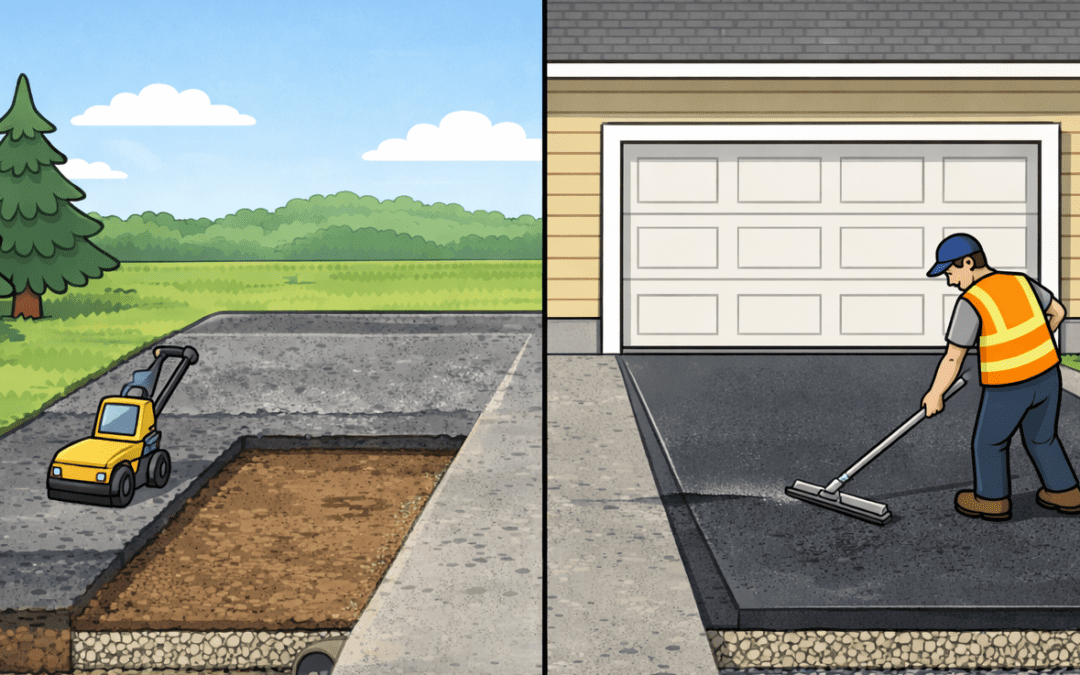
Choosing between a new driveway and resurfacing is easier when you focus on what lies beneath the surface. If the base and drainage are sound, resurfacing can be a smart, clean upgrade. If the base is weak or water is trapped, a new build is usually the only way to get lasting results.
This guide gives you a simple decision framework you can use before you call for quotes. For residential driveway paving, this quick check can save you from paying for the wrong fix. It explains when a full rebuild is the safer move, when an overlay makes sense, and which details separate a quick cosmetic job from work that holds up through Maine seasons. If you can, take a few photos after rain and note where water sits, where edges crumble, and where plows tend to catch. Those clues help your contractor match the scope to the real problem and avoid guessing. Bring those notes to the site walk.
When a Full Build Is Best for Residential Driveway Paving
A full rebuild is usually the right call when the driveway structure is failing, not just the top layer. Common signs include widespread alligator cracking, soft spots you can feel underfoot, sinking edges, or areas that stay wet long after rain. Those symptoms often trace back to water movement in the base, soft soils, or a driveway that was never built with enough thickness for its use.
A rebuild lets your crew correct grade and drainage first, then rebuild the base in compacted lifts. On soft soils, a separation fabric can help keep stone from pumping into the subgrade. Base thickness, careful shaping, and compaction are where most long-term performance comes from, even more than the final surface. This is also the best time to widen a tight turn, correct a low apron, add a culvert, or build stronger edges that resist shoulder breakdown and plow damage in winter season after season.
When an Overlay Works
An overlay, sometimes called resurfacing, works best when the base is stable, and the existing pavement has limited failures. If cracks are mostly hairline, the surface is generally level, and there is no rutting or widespread edge collapse, an overlay can refresh the look and improve ride quality without the cost of full excavation.
The right prep matters. A contractor may recommend milling high spots, leveling low areas, repairing localized base failures, and resetting structures, such as utility lids, to the finished grade. A tack coat helps bond the new layer to the old surface, but it cannot make a weak base strong again. Pay attention to thresholds at garage slabs, walks, and road aprons so the added height does not create drainage problems. For a clear, step-by-step reference on surface prep, tack coat, placement, and compaction checks, review the FHWA thin hot mix asphalt overlay checklist.
Asphalt Paving Details That Matter
Even a simple residential job benefits from commercial-level discipline. Asphalt paving quality depends on timing, compaction, and edge support. The mix has a workable temperature window, so delivery timing and crew coordination matter. If the mat cools too quickly, it becomes harder to compact properly, which can shorten service life.
Ask how the crew plans roller patterns and how they handle joints, edges, and transitions. Clean, tight joints reduce the places where water can enter. Strong edges resist crumbling, especially where tires turn and where plows push snow off the drive. Good planning also includes protecting landscape borders and keeping the site clean so loose millings and stone do not get tracked into garages or walks. On narrow drives, talk through staging so equipment does not block the only access point longer than needed, and confirm where you will park while the mat cures.
Cost, Timing, and Seasonal Windows
Cost is usually driven by base work. Full builds require excavation, base material, grading, and additional labor. Overlays can be more budget-friendly when the structure is sound, but they still require good prep and careful transitions.
In Maine, seasonal timing matters because temperatures and rain can change quickly. For residential driveway paving, the best schedules leave room for a clean prep day, a paving day, and a buffer for weather. If your project is near a busy road or in a tight neighborhood, plan access and parking for the day of work so the crew can keep asphalt paving moving without delays and reopen cleanly.
Free on-site recommendation
If you want a clear recommendation, start with a site visit and a written scope. Learn more on our About page, explore Residential Paving, and contact us to schedule a free in-person assessment. An owner is on site for every job.