
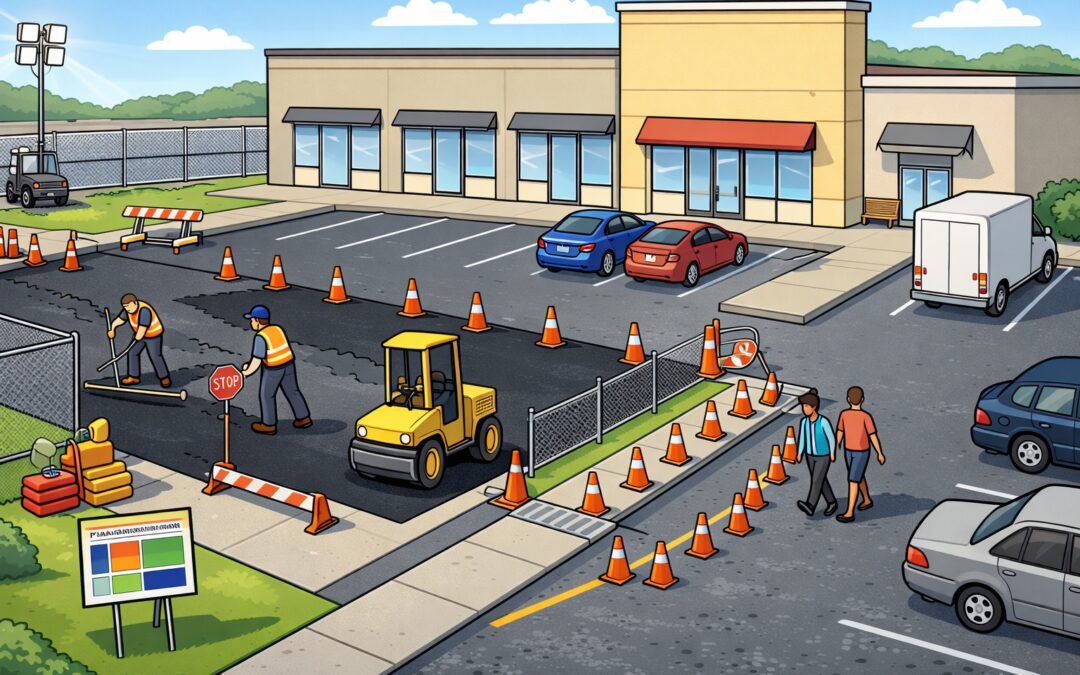
Keeping a property running while asphalt crews are on site can feel impossible, especially when you manage a multi-tenant plaza, a school, or a medical office. The good news is that commercial paving does not have to mean closed entrances, blocked deliveries, or frustrated visitors when the work is planned in smart phases.
Phasing is the difference between a job that causes chaos and a job that feels orderly. When you break the lot into zones and schedule high-impact steps for low-traffic hours, tenants can keep serving customers, buses can keep moving, and patients can still reach the front door. Property managers also protect revenue when they avoid a full shutdown.
This guide walks through a simple planning approach for parking areas that need to stay open, from early prep decisions to tenant communications and ADA-safe routes. Use it to build a timeline, set expectations, and keep parking lot paving moving without turning your site into a daily surprise. It also helps you set realistic reopening times.
Phasing by Zones and Hours for Commercial Paving
Start with a simple phasing map. Divide your lot into zones that match how people actually use the site: main entrance lanes, employee parking, loading areas, and overflow spaces. If your property has multiple driveways, plan to keep at least one primary entrance open at all times. Assign each zone a start date, a finish date, and a reopening time so everyone knows what “open” means.
Next, choose work windows. Many sites do best with off-hours and weekend work for milling, paving, and striping, while daytime windows can handle quieter tasks like saw-cut patching, inlet adjustments, or gravel shoulder work. If you manage a school or clinic, align loud work with the least disruptive hours.
Plan routes the same way you plan phases. Set a truck path that keeps deliveries moving and keeps heavy equipment away from pedestrian doors. Use clear detours for foot traffic, and keep at least one predictable path to each active entrance. If you have dumpsters, dock doors, or drop-off lanes, treat them as critical access points and phase around them.
Parking Lot Paving Prep
Good scheduling starts with the right scope. During parking lot paving prep, your contractor should confirm whether the surface needs milling or if an overlay is appropriate, and identify any areas where full-depth base repairs are required. Look for fatigue cracking, rutting, and edge failure, since those often indicate problems below the surface.
For commercial paving, prep is where you protect the schedule. Check drainage before asphalt goes down. Walk the lot after a rain if you can. Low spots, failing catch basins, and soft shoulders usually point to water movement that should be corrected first. Mark utility lids, valve boxes, and raised structures that need resetting to finished grade, and confirm how transitions to sidewalks or entrances will be protected.
Finally, plan staging. Choose areas for materials and equipment that do not block fire lanes, customer entrances, or delivery zones. A dedicated staging area keeps the worksite tighter, supports faster paving cycles, and reduces surprise closures.
Communication Plan with Tenants
A communication plan is part of the scope, not an afterthought. For multi-tenant sites, combine door flyers with an email notice that includes dates, hours, and a simple map showing which zones will be closed each day. For high-traffic facilities, add SMS alerts for staff, and place a portable site map board at each entrance with the current phase and the next phase.
Send the first notice at least one week before mobilization, then send a short reminder the day before each phase changes. Keep messages consistent: what is closed, what is open, where to park, and who to contact for deliveries or access needs. Name a single point of contact on your side and a single point of contact from the paving crew so tenants know who to call when plans shift.
Safety and ADA During Construction
Safety planning should cover vehicles, pedestrians, and accessibility. Use cones, barriers, and advance signage so drivers can slow down before they reach the work area. If the site has crosswalks, treat them like their own phase, and use spotters when equipment is backing or crossing travel lanes.
If night work is planned, add temporary lighting that supports safe walking routes and clear visibility for equipment. Keep walkways free of loose millings, and avoid creating abrupt edges where pedestrians step from pavement to base material.
For ADA compliance, do not assume a “temporary interruption” is enough. Maintain or provide an alternate accessible route whenever the usual path is blocked, and keep ramps, access aisles, and curb cuts clear of materials. For a plain-language baseline, review the Department of Justice guidance in the ADA Title III regulations.
.
Choosing a Commercial Paving Contractor
Choosing a commercial paving contractor is easiest when you ask for specifics. Request a written scope that lists the mix type, planned thickness, where milling or full-depth repairs are included, and how compaction will be verified. Ask for a draft schedule that shows zones, work hours, and reopening times by phase.
Confirm who provides and maintains traffic control devices, and who is responsible for protecting pedestrian routes. You should also know who your on-site lead is and how changes are approved. At Certified Paving Co., an owner is on site at every job, and we bring four generations of skill to each plan.
A strong commercial paving contractor will propose phasing options, explain tradeoffs, and flag risks early.
Want a plan that keeps your property open? Start with a walkthrough and a phasing map. Learn how we run projects on our About page, review our services for property managers, then contact us to schedule a site visit this week.