
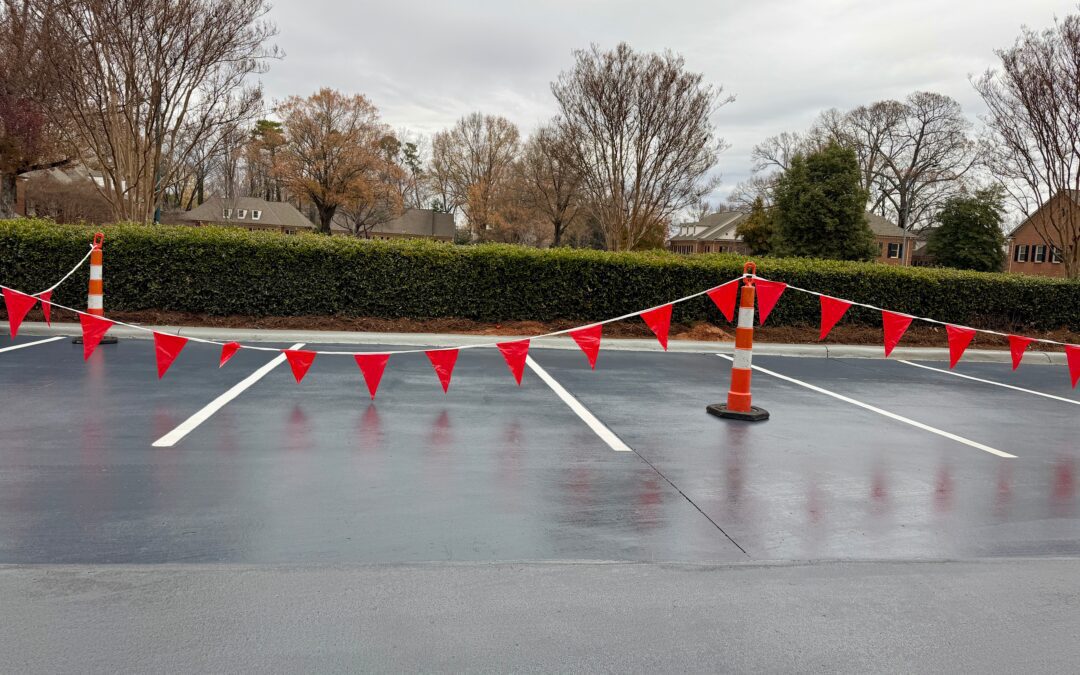
Commercial paving lasts longer when water has somewhere to go. A smooth surface matters, but the base and drainage decide whether that surface stays strong through traffic, freeze-thaw cycles, spring runoff, regular use, and everyday wear through every Maine season.
Many early pavement failures start below the surface. Water slips into cracks, sits at the edge, or stays trapped in the base. Once that happens, the pavement loses support and the surface starts showing the result. That is why commercial paving should start with drainage, grading, and base strength before anyone talks about the final mat. Certified Paving says it begins with the subbase and how water leaves the site because most pavement problems start under the surface. The company also ties that same approach to driveways, where culverts, supported edges, and clean transitions help the pavement hold up in Maine weather.
Survey Water Paths Before Commercial Paving
The first step is to follow the water. Walk the site after rain if possible and note where water ponds, where it crosses travel lanes, and where it sits at building edges or catch basins. On commercial sites, pay close attention to entrances, loading areas, curb lines, and places where vehicles brake or turn. Those sections often fail first because they combine heavy stress with trapped moisture. Also look for broken edges, dark damp bands, or recurring patches that seem to fail in the same place.
The FHWA geotechnical pavement guidance explains why this matters. Water in the asphalt surface can reduce strength, added moisture in unbound base and subbase can cause major stiffness loss, and trapped water in the pavement section can sharply shorten pavement life. FHWA also notes that dense-graded bases often drain slowly, which can leave the pavement acting like a sponge instead of a stable platform. That is why a drainage review should happen before paving scopes are finalized, not after cracks and potholes show up.
Rebuild the Base Where Needed
Once you know where the water moves, the next step is deciding whether the base can stay or needs repair. Certified Paving says it adjusts grades or adds drains when water pools, removes weak areas on projects that allow it, rebuilds the subbase, and compacts in lifts. It also says proof rolling rebuilt areas helps find weak spots before paving. That process matters because a surface repair over a failing base often turns into the same callback a season later.
For lots and private roads, base work may include excavation, added stone, lift-by-lift compaction, and changes to edge support or drainage structures. The goal is simple: restore support so the asphalt can carry traffic without deforming. FHWA notes that drainage improvements can significantly affect pavement design life and performance, especially where rainfall or trapped moisture is a constant issue. In practical terms, rebuilding the weak sections first is usually cheaper than paying for repeat patching, ponding, and early cracking.
Residential Asphalt Paving Examples
The same rule applies on the residential side. Certified Paving’s driveway page says the crew checks drainage, soil, shade, and trees near the edge during the site walk, then writes a clear scope with pricing and timing. It also says that where a culvert is needed, the crew sets it to move water under the drive and protect the edge. On soft soils, the company can add fabric and more base to spread the load and reduce settling.
Those details matter because residential asphalt paving often fails at the margins first. Water pools at the apron, shoulders break down, or the drive settles where the base was never strong enough. Certified Paving also notes that compacted, supported edges help keep the surface easier to plow in winter. In other words, residential asphalt paving lasts longer when the drainage plan is treated as part of the paving job, not as a separate issue to handle later.
Overlay vs Rebuild Decision Tree
If the base is sound and the surface problems are limited, an overlay may be enough. That is often true when cracking is light, grades still work, and there are no soft spots or repeat failures after rain. In those cases, paving crews can mill or level problem areas, protect thresholds, and place a new mat on a stable structure.
If water still ponds, the edge keeps breaking down, or soft areas return each spring, rebuild is usually the smarter path. Certified Paving’s site says good drainage and a strong subbase let the asphalt do its job and carry traffic without deforming. That is a simple rule for both commercial lots and residential drives. If the structure below is weak, adding more asphalt on top rarely solves the real problem.
Book a drainage-focused site review
If your pavement keeps cracking, rutting, or holding water, start with the cause, not the symptom. Review our parking lot and private-road services, our driveway paving services, and our contact page to schedule a free drainage-focused site review. Certified Paving says an owner is on site at every job and that clear scopes help customers plan the right work at the right time.